

The landscape of healthcare in Pakistan has seen remarkable transformations over the past few decades. Among the myriad of medical disciplines, dentistry and oral health have often struggled to receive the prioritized attention they genuinely require. However, a monumental shift in this paradigm occurred with the establishment of dedicated, specialized institutions aimed at elevating the standards of dental care, education, and research. At the absolute forefront of this medical revolution stands the Fatima Jinnah Institute of Dental Sciences. Serving as a beacon of hope, clinical excellence, and advanced medical pedagogy, this premier public sector healthcare organization is fundamentally altering how oral healthcare is perceived, administered, and taught in the province of Punjab and across Pakistan.
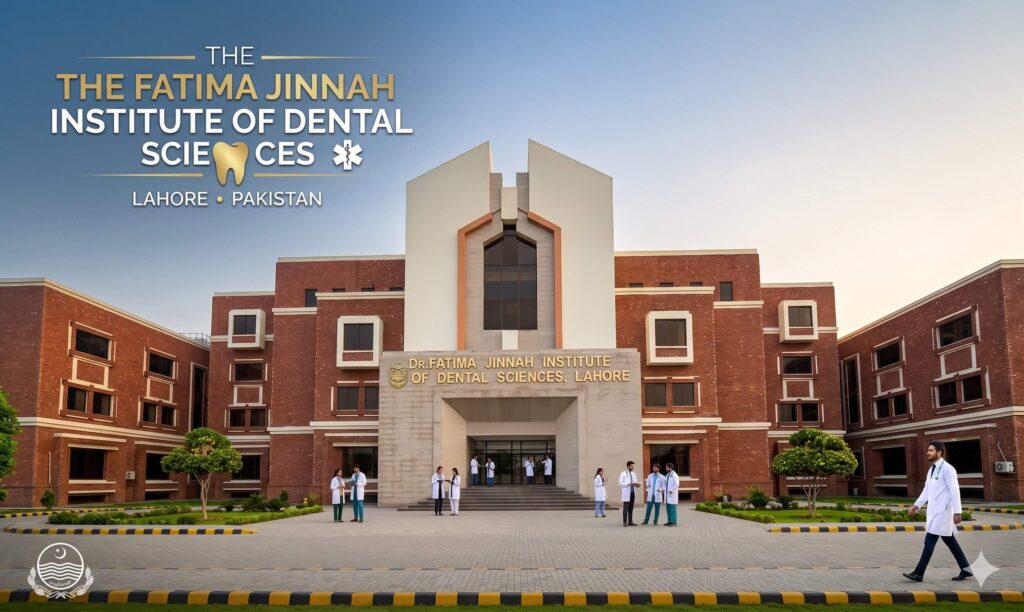
Situated strategically in Jubilee Town Lahore, the Fatima Jinnah Institute of Dental Sciences is not merely a hospital; it is a holistic ecosystem designed to integrate patient care, rigorous academic training, and groundbreaking medical research. This exhaustive article delves deep into the history, architectural layout, cutting-edge facilities, teaching services, and the broader socio-medical impact of this highly esteemed institution.
Introduction and Strategic Significance
The inception of specialized dental institutions is a critical metric for evaluating the healthcare maturity of any developing nation. The Fatima Jinnah Institute of Dental Sciences represents the culmination of visionary healthcare planning aimed at bridging the massive gap between patient volume and available specialized dental care. Dental anomalies, ranging from severe periodontal diseases to complex maxillofacial traumas, require not only skilled practitioners but also an environment equipped with modern technological frameworks.
Located in the rapidly developing area of Jubilee Town Lahore, the institute is highly accessible to millions of residents from the city’s metropolitan sprawl, as well as to patients traveling from adjoining rural and semi-urban districts. The choice of Jubilee Town Lahore was strategic. Spread over a sprawling 100 kanals, the campus provides ample space for a multi-disciplinary hospital, an academic block, research centers, and residential quarters. By situating the Fatima Jinnah Institute of Dental Sciences in Jubilee Town Lahore, city planners ensured that the facility could accommodate future expansions while remaining insulated from the extreme traffic congestion of the central city.
A Journey Through History: From Inception to Inauguration
The story of the Fatima Jinnah Institute of Dental Sciences is one of grand vision, extended bureaucratic delays, and ultimately, a triumphant realization. The historical trajectory of this institute serves as a fascinating case study in the execution of public sector mega-projects in Pakistan.
The Initial Vision and Foundation (2005)
The conceptualization of the Fatima Jinnah Institute of Dental Sciences dates back to the early 2000s. Recognizing the immense strain on existing dental sections of allied hospitals, the Punjab government envisioned a standalone, state-of-the-art facility. The foundation stone of the complex was laid on July 31, 2005, under the administration of the then-Chief Minister of Punjab, Chaudhry Pervaiz Elahi. The initial plan was highly ambitious: a fully functional dental hospital and college that was scheduled to open its doors to the public and students by 2009. The initial budget allocation was set at an estimated Rs. 800 million.
The Period of Stagnation
Despite the grand groundbreaking, the project quickly became entangled in a web of political transitions, funding deficits, and administrative hurdles. For nearly 17 years, the fate of the Fatima Jinnah Institute of Dental Sciences hung in the balance. The sprawling infrastructure in Jubilee Town Lahore remained an unfinished concrete skeleton. During this extended hiatus, the lack of this facility placed an immense burden on other teaching hospitals in Lahore. Dental students were forced to seek education in overcrowded wards elsewhere, and patients faced long waiting lists for specialized treatments. At one point, authorities even considered abandoning the standalone vision and merging the unfinished project with other established medical colleges.
The Triumphant Revival and Inauguration (2024)
The turning point for the Fatima Jinnah Institute of Dental Sciences arrived when the provincial government made a steadfast commitment to finalize pending public welfare projects. Under the caretaker government, a massive push was initiated. The Communication and Works (C&W) Department, alongside the Specialized Healthcare and Medical Education Department, accelerated the construction and procurement processes.
Finally, on January 30, 2024, the prolonged wait ended. The Caretaker Punjab Chief Minister, Mohsin Naqvi, officially inaugurated the completed Fatima Jinnah Institute of Dental Sciences. Due to inflation and the extended timeline, the final completion cost rose to approximately Rs. 4.5 billion. However, the end result justified the expenditure. The inauguration ceremony was a landmark event, attended by key figures in the medical community, acknowledging the relentless efforts of individuals like the late Dr. Talib Ullah, former President Dr. Arif Alvi, and Prof Dr. Waheed-ul-Hamid, who advocated for the project for years.
World-Class Facilities and Clinical Infrastructure
The architectural and technological framework of the Fatima Jinnah Institute of Dental Sciences is designed to rival top-tier dental hospitals globally. The facility is meticulously zoned to ensure a seamless flow of patients, students, and administrative staff, minimizing cross-contamination and maximizing clinical efficiency.
Outpatient and Inpatient Departments
The hospital features a massive capacity to handle the heavy daily influx of patients seeking dental care. It houses 120 beds, providing ample room for patients recovering from extensive maxillofacial surgeries or those requiring continuous medical observation. Out of these, a significant portion is dedicated to the inpatient wards, while the rest are dynamically utilized.
The crown jewel of the clinical setup is the inclusion of 90 state-of-the-art Outpatient Department (OPD) dental units. These units are ergonomically designed to provide maximum comfort to the patient while offering the attending dentist complete access to integrated diagnostic tools.
Advanced Diagnostic and Radiation Control
A core component of modern dentistry is accurate imaging. The Fatima Jinnah Institute of Dental Sciences boasts a highly specialized radiation control room equipped with the latest digital radiography machines. This includes advanced Cone Beam Computed Tomography (CBCT) scanners, panoramic X-ray machines, and intraoral scanners. These tools allow for precise 3D imaging of the jaw, teeth, and facial bones, which is critical for complex procedures like dental implants, root canal therapies, and orthodontic planning. The entire diagnostic process is tied to an online digital system, ensuring that patient records, X-rays, and treatment histories are instantly accessible to doctors across the hospital via a secure network.
Surgical Theaters and Sterilization Protocols
For invasive procedures, the Fatima Jinnah Institute of Dental Sciences is equipped with modern, fully sterile operating theaters. These are utilized by the Oral and Maxillofacial Surgery department for trauma cases, tumor excisions, and reconstructive surgeries. To maintain the highest standards of infection control, the institute operates a centralized sterilization department. Utilizing hospital-grade autoclaves and ultrasonic cleaners, this department ensures that every instrument used in the 90 OPD units and surgical suites is completely free of pathogens, heavily mitigating the risk of cross-infection.
Residential and Support Facilities
Understanding that a medical institution operates around the clock, the campus in Jubilee Town Lahore includes highly secure and well-furnished hostels for both male and female students, as well as residential apartments for the nursing and medical staff. The waiting areas for patients are spacious, air-conditioned, and designed to provide a calming environment, reducing the anxiety typically associated with dental visits.
Academic Excellence and Teaching Services
While providing exceptional patient care is a primary mandate, the Fatima Jinnah Institute of Dental Sciences is equally dedicated to shaping the future of dental professionals in Pakistan. The institute serves as a premier teaching hospital, fostering an environment of rigorous academic pursuit, critical thinking, and hands-on clinical mastery.
Undergraduate Education (BDS Program)
The backbone of the institute’s teaching services is its Bachelor of Dental Surgery (BDS) program. Affiliated with top medical universities and regulatory bodies, the curriculum is designed to be highly intensive. Students at the Fatima Jinnah Institute of Dental Sciences benefit from a uniquely low student-to-patient ratio. Unlike older institutions where students might struggle to get adequate clinical hours, the 90 operational units here ensure that every student gains extensive hands-on experience under the strict supervision of senior faculty.
The initial years of the program focus heavily on basic medical sciences—anatomy, physiology, biochemistry, and pharmacology. As students progress, the focus shifts entirely to specialized dental sciences. The teaching methodology incorporates modern pedagogical tools, including phantom head laboratories where students can practice complex procedures on highly realistic dental mannequins before ever treating a live patient.
Postgraduate Training and Specialization
To elevate the standard of specialized care in the country, the Fatima Jinnah Institute of Dental Sciences serves as a hub for postgraduate training. It offers residency programs and fellowships in various dental specialties. Medical graduates compete fiercely to secure a spot here due to the availability of advanced equipment and exposure to a vast variety of complex clinical cases. The postgraduate training covers specialties such as:
- Operative Dentistry and Endodontics: Focusing on restorative procedures and complex root canal treatments.
- Prosthodontics: Training in the design, manufacture, and fitting of artificial replacements for teeth and other parts of the mouth, including cutting-edge dental implants.
- Orthodontics: Specializing in the correction of malpositioned teeth and jaws using braces and clear aligners.
- Oral and Maxillofacial Surgery: A highly demanding specialty dealing with surgical treatments of diseases, injuries, and defects in the head, neck, face, and jaws.
- Periodontology: The study and treatment of the supporting structures of teeth, focusing heavily on gum diseases.
- Pediatric Dentistry: Training doctors to handle the unique dental needs and behavioral management of children and adolescents.
A Stellar Faculty and Workforce
The quality of education and treatment is directly proportional to the expertise of the staff. The Fatima Jinnah Institute of Dental Sciences employs a massive, highly qualified workforce. To ensure seamless operations across different shifts, the government authorized the deployment of over 435 doctors, including renowned professors, associate professors, and specialized dental surgeons. This impressive roster of medical professionals is supported by a dedicated team of junior technicians in dental technology, radiology experts, and administrative staff, all recruited strictly on merit.
Research, Innovation, and Technological Integration
In the modern era, a medical institution cannot rely solely on existing knowledge; it must contribute to the global scientific community. The Fatima Jinnah Institute of Dental Sciences places a heavy emphasis on research and innovation.
The institute encourages both its faculty and postgraduate students to engage in clinical trials, epidemiological studies, and material sciences research. With a diverse patient demographic visiting the Jubilee Town Lahore campus, researchers have access to a vast pool of clinical data. This facilitates studies on the prevalence of specific oral diseases in Punjab, the efficacy of newly developed dental materials, and the socio-economic factors affecting dental health.
Furthermore, the Fatima Jinnah Institute of Dental Sciences acts as a pioneer in digital dentistry in the region. The integration of Computer-Aided Design and Computer-Aided Manufacturing (CAD/CAM) technologies allows for the rapid creation of dental crowns, bridges, and prosthetics. This reduces the waiting time for patients from weeks to mere days, drastically improving patient satisfaction and operational efficiency.
Community Outreach and Public Health Impact
The mandate of the Fatima Jinnah Institute of Dental Sciences extends far beyond the physical boundaries of its campus in Jubilee Town Lahore. Oral health is heavily influenced by public awareness, dietary habits, and basic hygiene practices. In Pakistan, rural and socio-economically disadvantaged populations often suffer from preventable dental diseases due to a lack of awareness and access to care.
To combat this, the institute’s Department of Community Dentistry spearheads extensive outreach programs. Teams of doctors and students frequently organize free dental camps in underprivileged areas, schools, and community centers. These camps provide free basic screenings, preventative treatments like fluoride varnishes, and essential education on brushing techniques and the dangers of tobacco and betel nut consumption—leading causes of oral cancer in the region.
Through these initiatives, the Fatima Jinnah Institute of Dental Sciences acts as a proactive force in preventative healthcare, ultimately aiming to reduce the burden of severe dental diseases before they require complex, expensive hospital interventions.
The Operational Framework and Career Opportunities
Managing a facility as large and complex as the Fatima Jinnah Institute of Dental Sciences requires a robust administrative and operational framework. Operating as a public sector entity under the Specialized Healthcare and Medical Education Department of Punjab, the institute adheres to strict protocols regarding patient care, data management, and human resources.
A Hub for Medical Careers
Because of its massive scale, the institute is a major employer in the healthcare sector. It frequently announces career opportunities that draw applicants from all over the province. These roles are not limited to doctors and surgeons. The smooth functioning of the 90 dental units and 120 hospital beds relies heavily on allied health professionals.
The Fatima Jinnah Institute of Dental Sciences provides excellent career trajectories for Junior Technicians in Dental Technology, radiographers, sterilization experts, nursing staff, and hospital administrators. By maintaining a strict, merit-based selection process involving the Punjab government’s testing services, the institute ensures that only the most competent and dedicated professionals are tasked with managing patient care and the expensive, highly sensitive medical equipment.
Navigating the Future: Expansion and Vision
As the population of Punjab continues to grow, the demand for specialized healthcare will inevitably rise. The current iteration of the Fatima Jinnah Institute of Dental Sciences is just the beginning. The massive 100-kanal campus in Jubilee Town Lahore was designed with foresight, providing ample physical space for future expansion phases.
Future visions for the institute include the establishment of an independent dedicated center for oral cancer research and treatment, given the high prevalence of the disease in the subcontinent. There are also plans to expand the digital dentistry footprint, introducing artificial intelligence (AI) in diagnostic imaging to assist radiologists in identifying minute pathologies that might escape the human eye.
Furthermore, as the alumni network of the Fatima Jinnah Institute of Dental Sciences grows, the institute will naturally transition into a global collaborative hub. Partnerships with international dental schools and research bodies will allow for student exchange programs, shared clinical trials, and the continuous updating of the curriculum to match global standards.
Conclusion: A Monument to Medical Progress
The journey of the Fatima Jinnah Institute of Dental Sciences—from a delayed construction project to a bustling, state-of-the-art medical powerhouse—is a testament to the resilience and ultimate commitment to public welfare. It stands today not just as a building of brick and mortar, but as a sanctuary of healing and a crucible for academic brilliance.
By providing top-tier, highly subsidized dental care to the masses, the institute ensures that advanced treatments like dental implants, complex maxillofacial surgeries, and high-end orthodontics are not exclusive privileges of the wealthy. Simultaneously, by housing hundreds of dedicated students and faculty members, it ensures that the next generation of Pakistani dentists is trained on the most advanced equipment available globally.Located proudly in Jubilee Town Lahore near LDA Avenue One, the Fatima Jinnah Institute of Dental Sciences has irrevocably changed the trajectory of dental healthcare in the region. Whether you are a patient seeking world-class treatment, a student aspiring to master the art and science of dentistry, or a medical professional looking for an environment of clinical excellence, this institution represents the absolute pinnacle of what is possible in the realm of oral healthcare in Pakistan. As it continues to operate, expand, and heal, the Fatima Jinnah Institute of Dental Sciences will undoubtedly cement its legacy as one of the most vital healthcare institutions in the nation’s history.